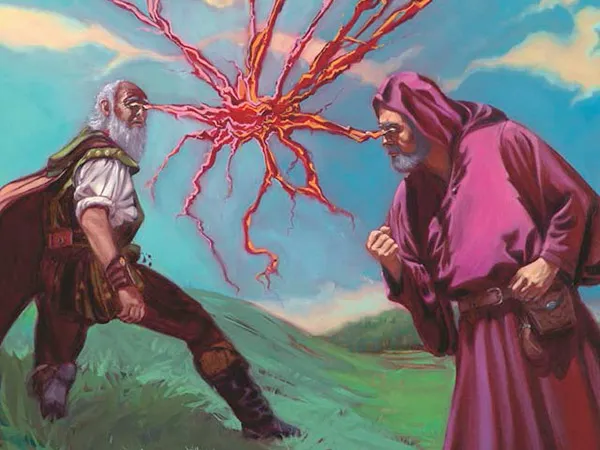
Tiny Leaders Reborn is designed from the ground up as a one-on-one format. 1v1 play is the game’s original form and TLR embraces that structure, allowing it to inform how decks are built, how games progress, and how players approach each decision.
1v1 Structure
Magic in its Original Form
The Unambiguous Objective
In a 1v1 environment, the objective is unambiguous. A player must defeat the opponent across the table. There are no shifting alliances, no shared threats, and no table politics to absorb pressure or redistribute responsibility.
Every spell, attack, and interaction is aimed at a single opponent who is actively contesting your plan. That clarity produces a level of focus and tension that multiplayer formats simply don’t provide.
Removing the Safety Valves
Multiplayer Commander often rewards patience and positioning, waiting for openings, leveraging diplomacy, or letting the table correct imbalances. In 1v1, those safety valves disappear.
- Pressure must be applied proactively.
- Threats must be answered directly.
- Closing a game is your responsibility alone.
Errors are punished more quickly, and advantages are something you establish and maintain, not something you can negotiate away.
Sharper Play
This structure naturally incentivizes sharper play, even when decks themselves are not fully optimized. Pacing, resource management, and inevitability matter from the opening turns. Interaction becomes more purposeful, and strategies must function without assuming additional opponents or extended setup windows.
Importantly, 1v1 does not narrow expression, rather it refines it. Creativity still thrives, but expectations shift. Decks are built to engage an opponent head-on, whether through focused execution, disruption, or prolonged interactive play. With multiplayer dynamics removed, those choices resolve more cleanly and carry more weight.